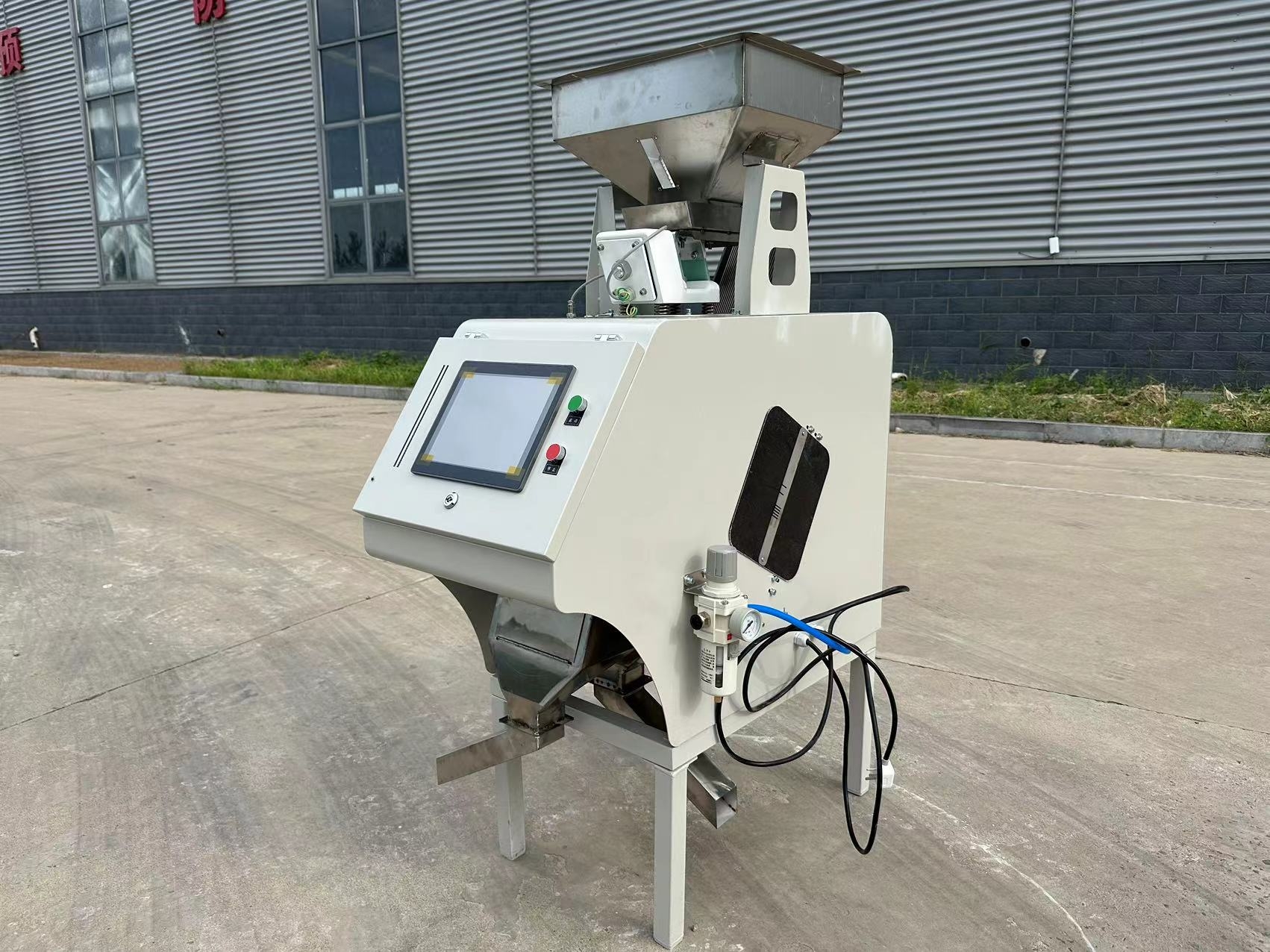
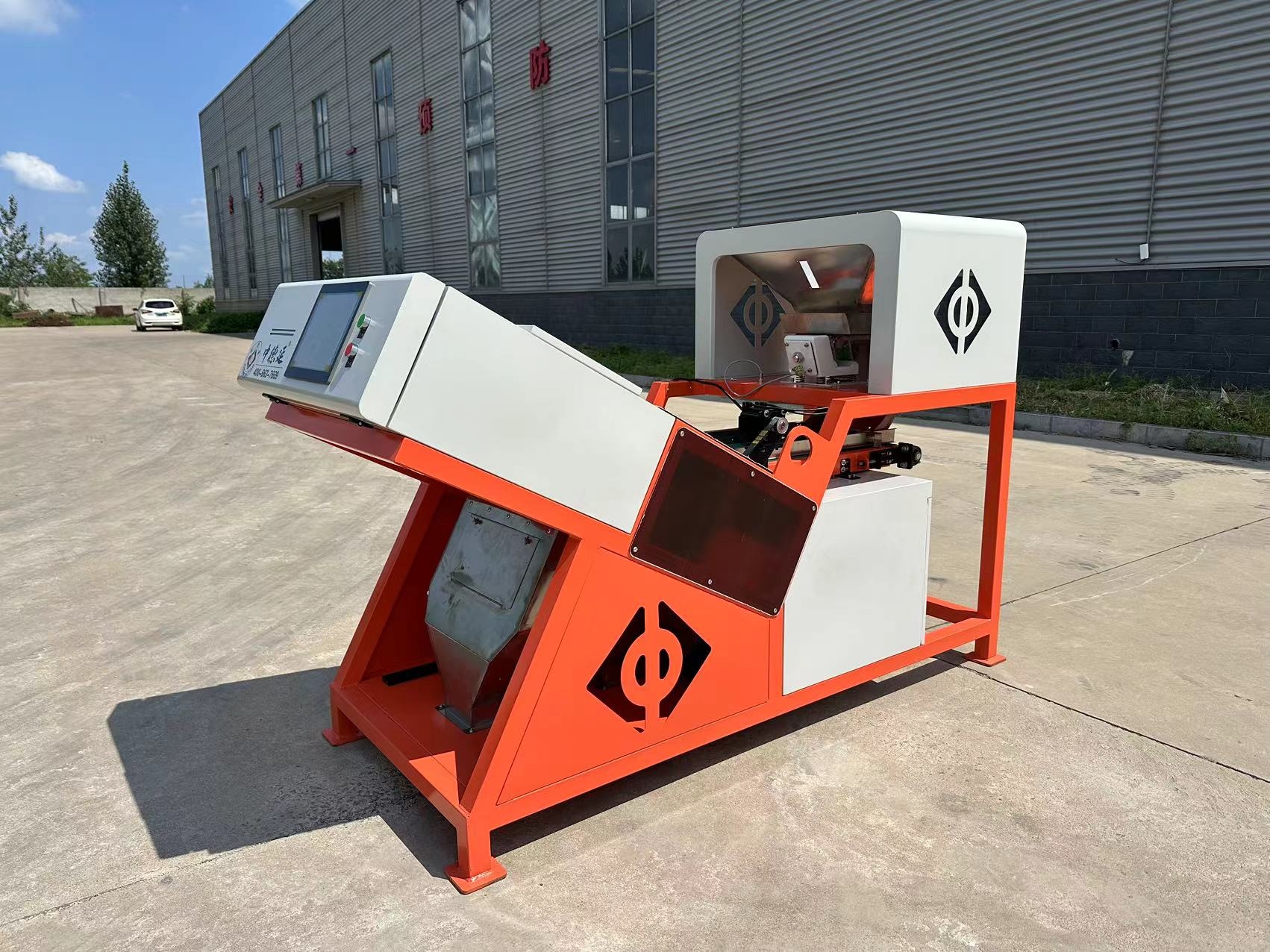
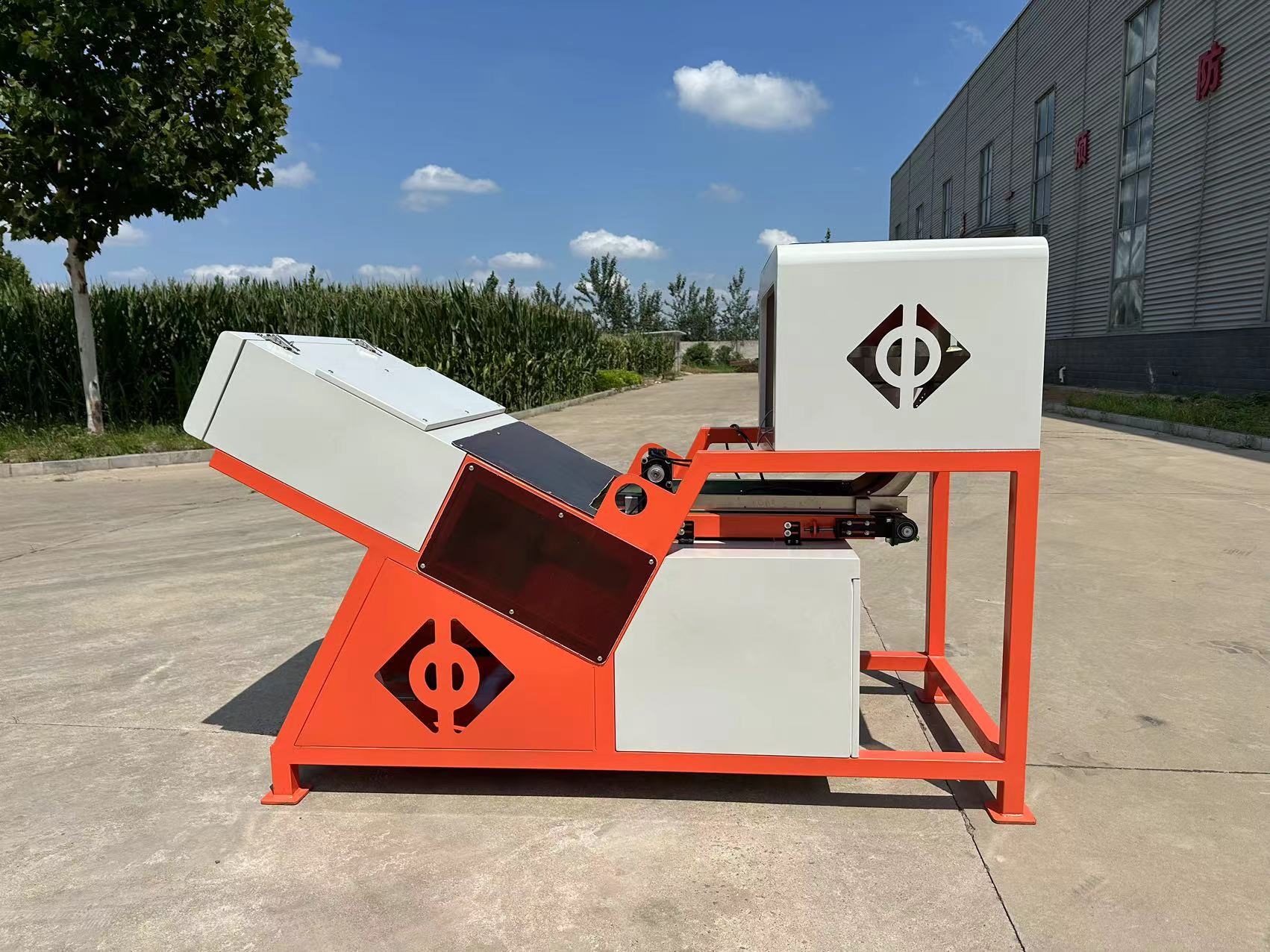
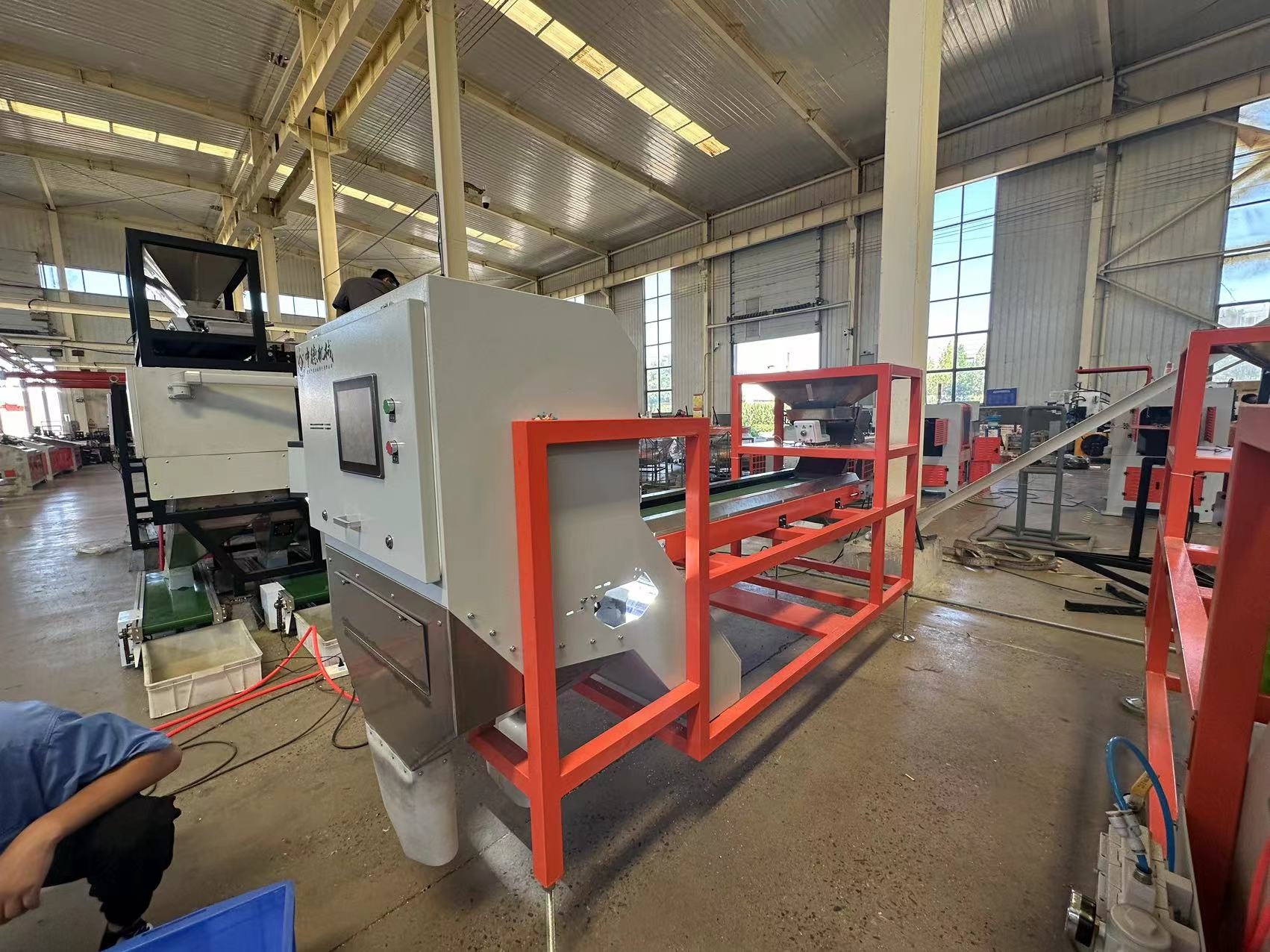
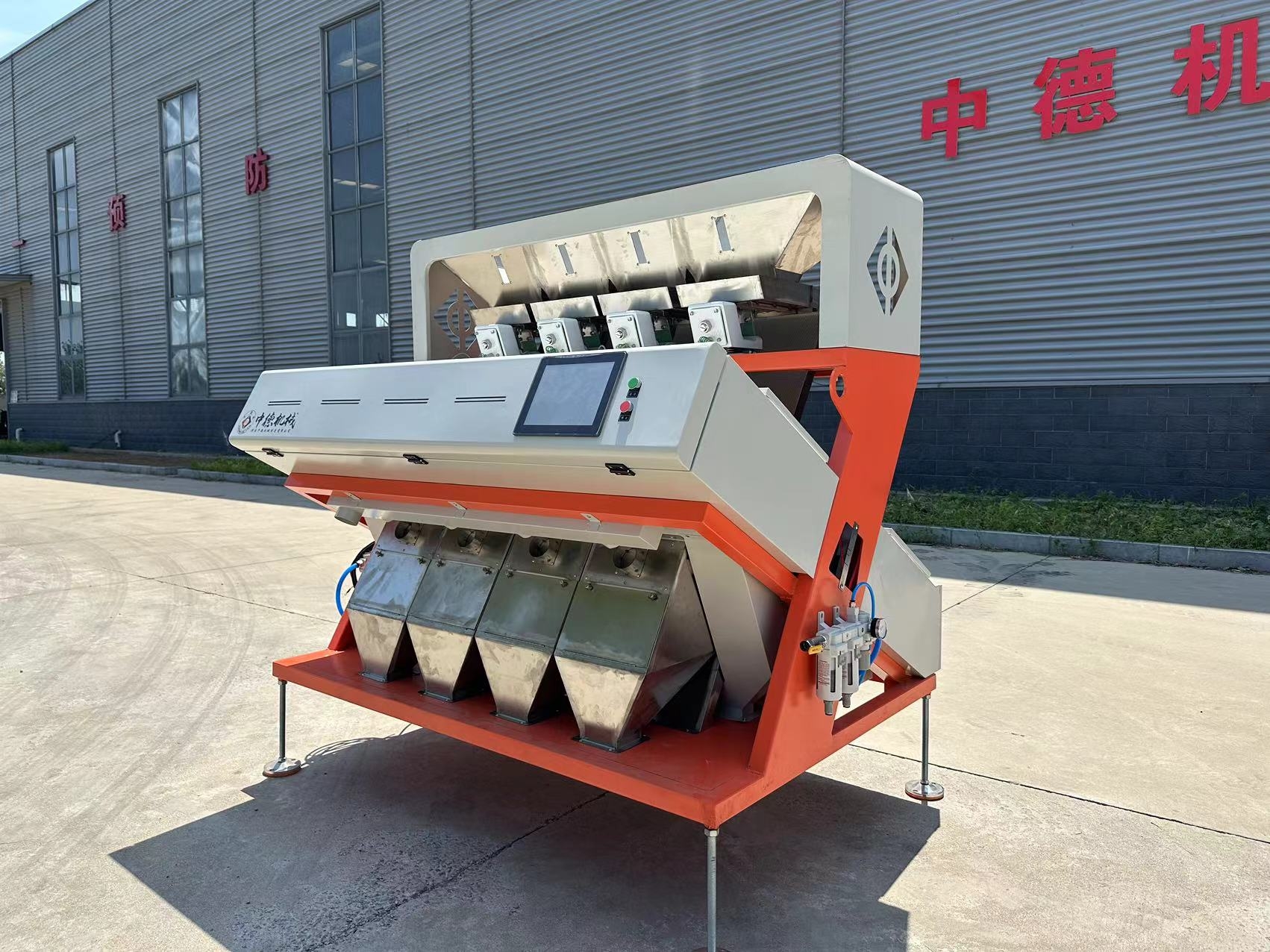
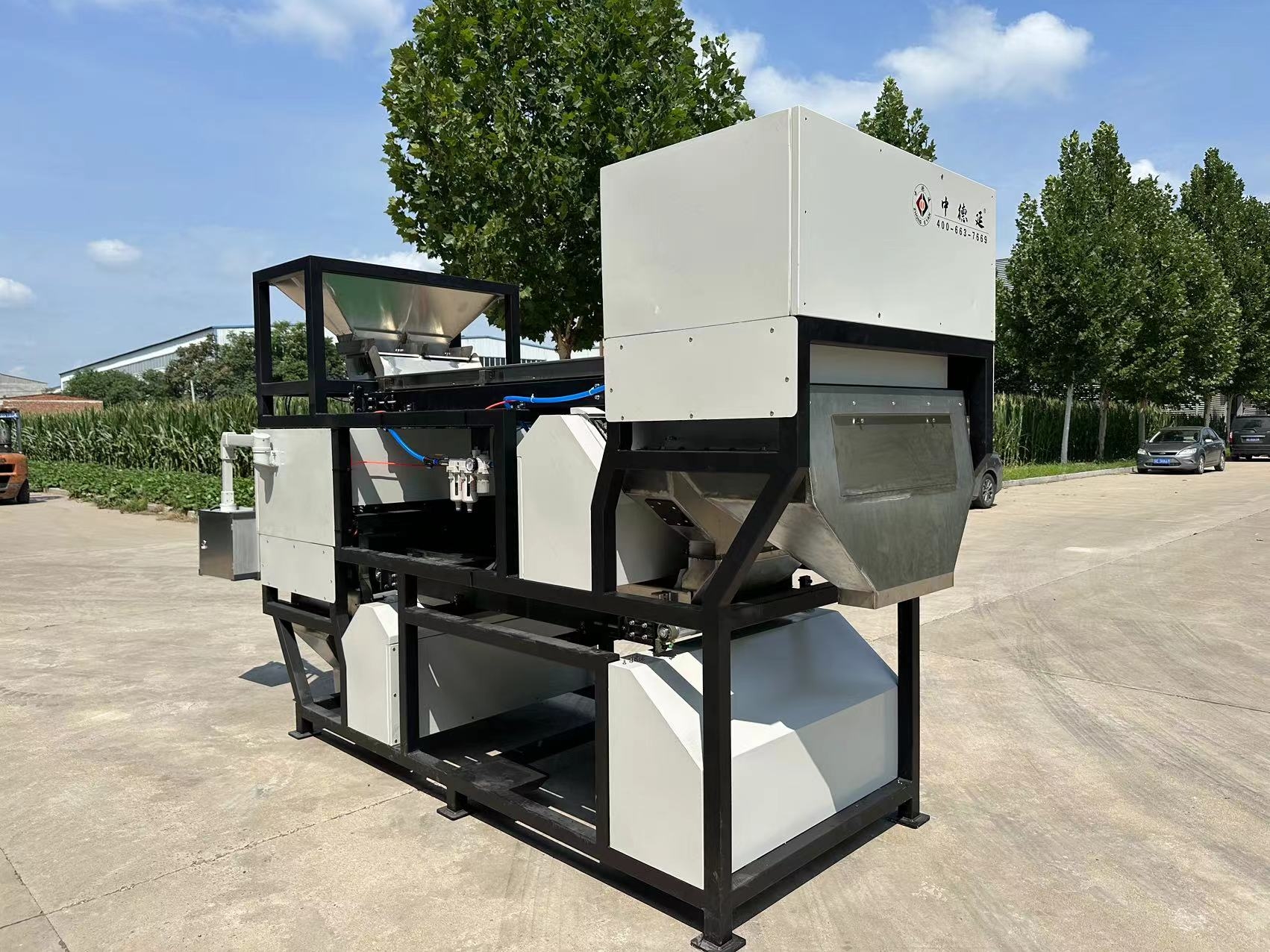
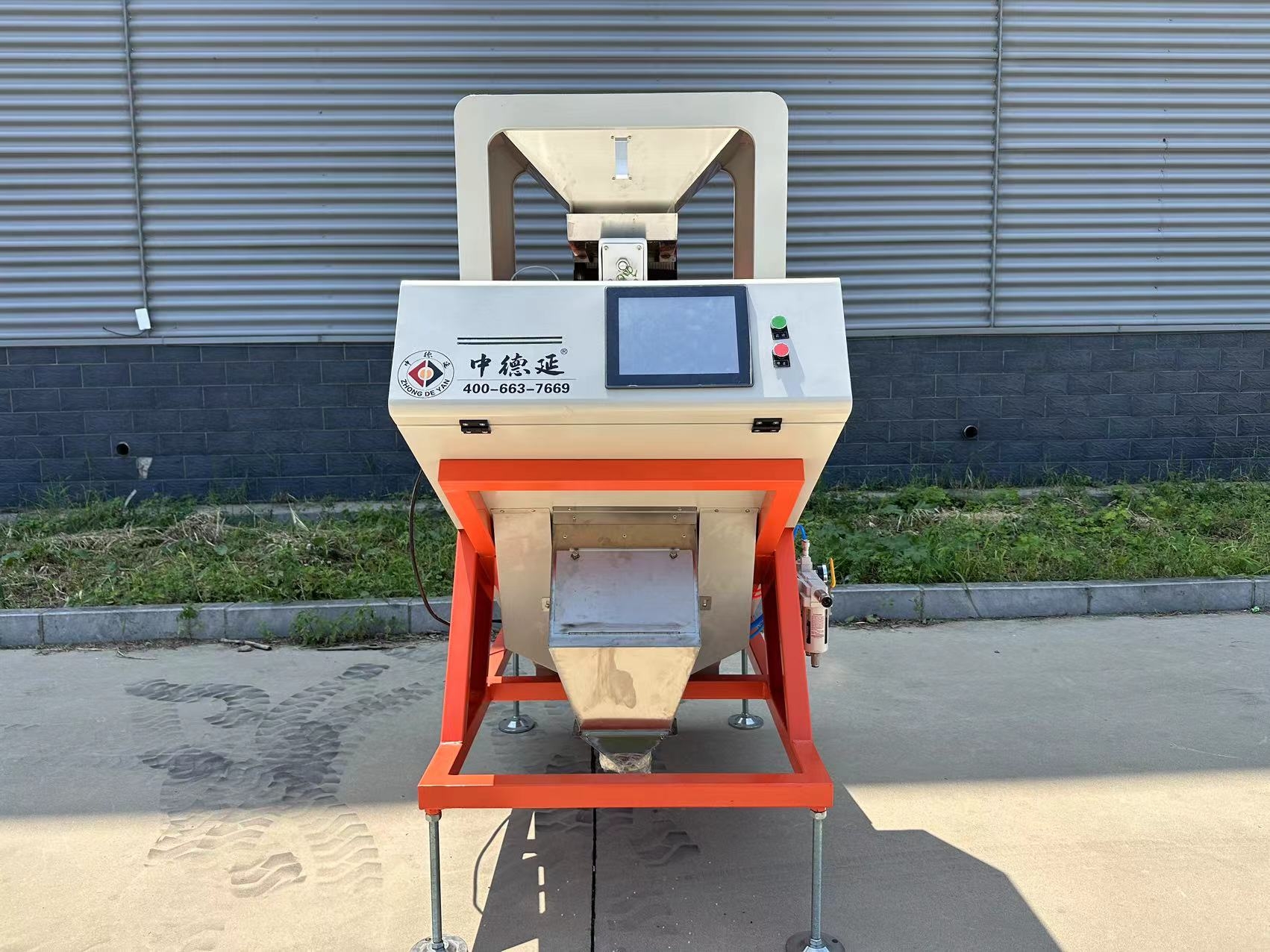
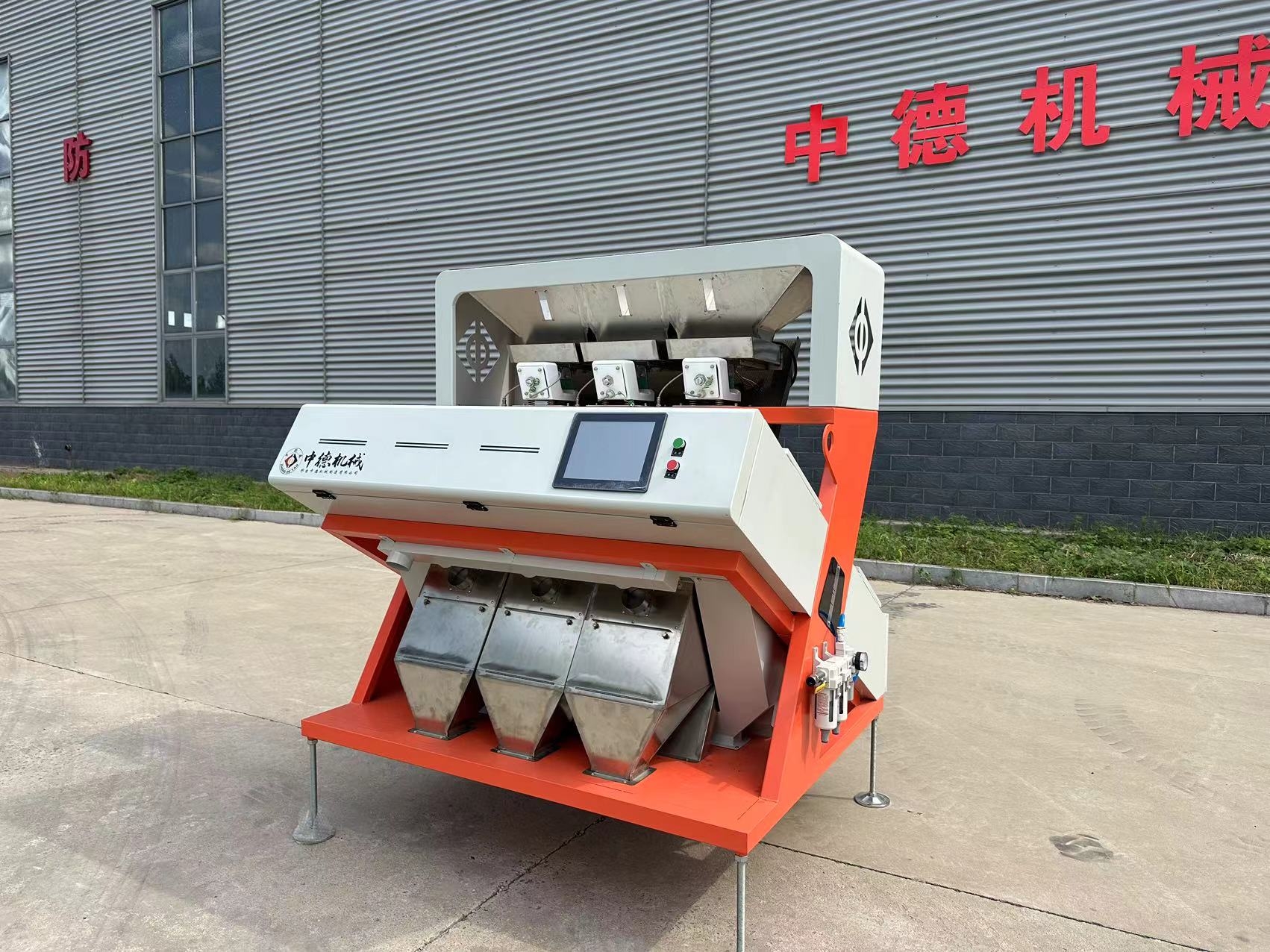
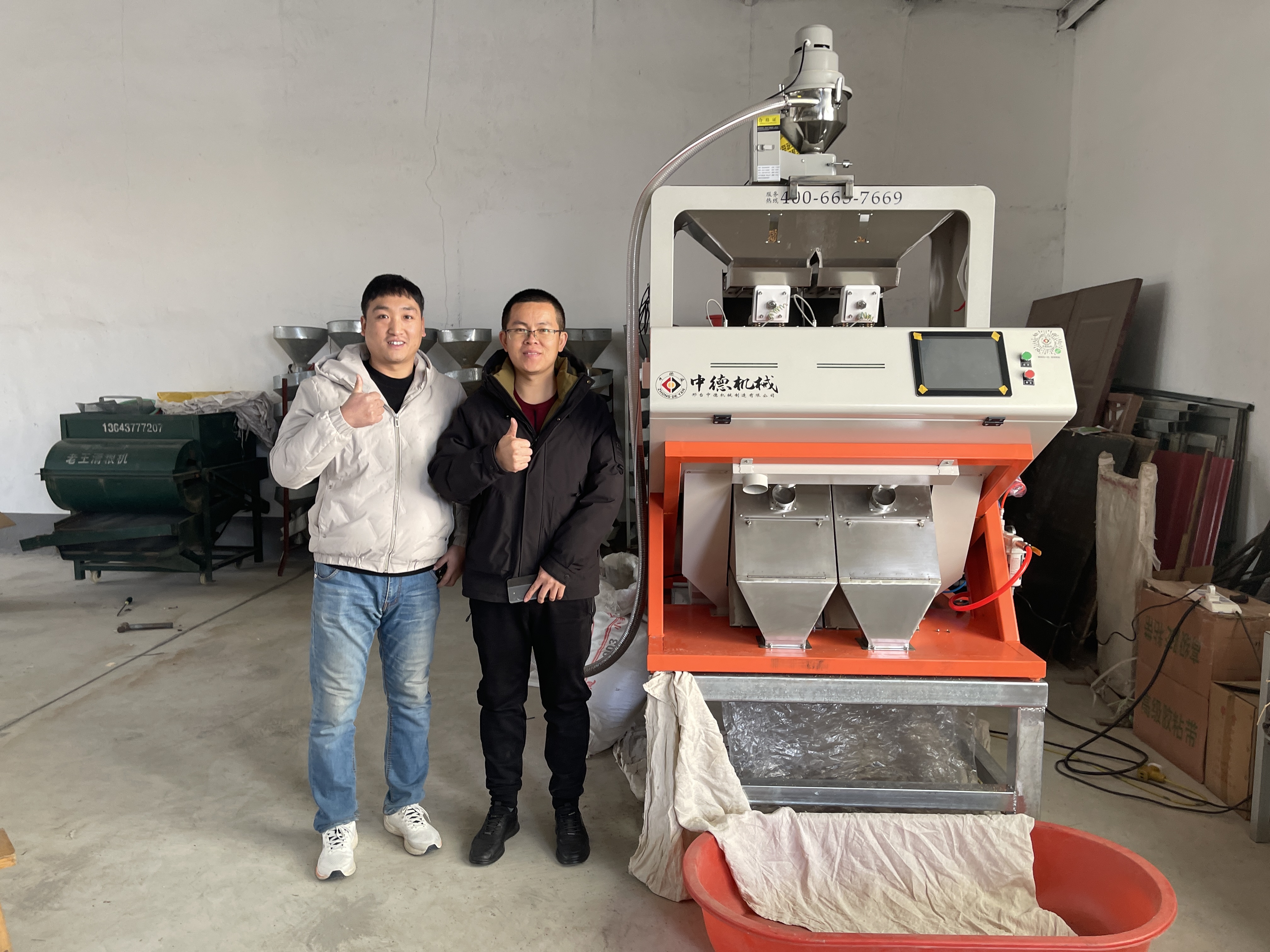
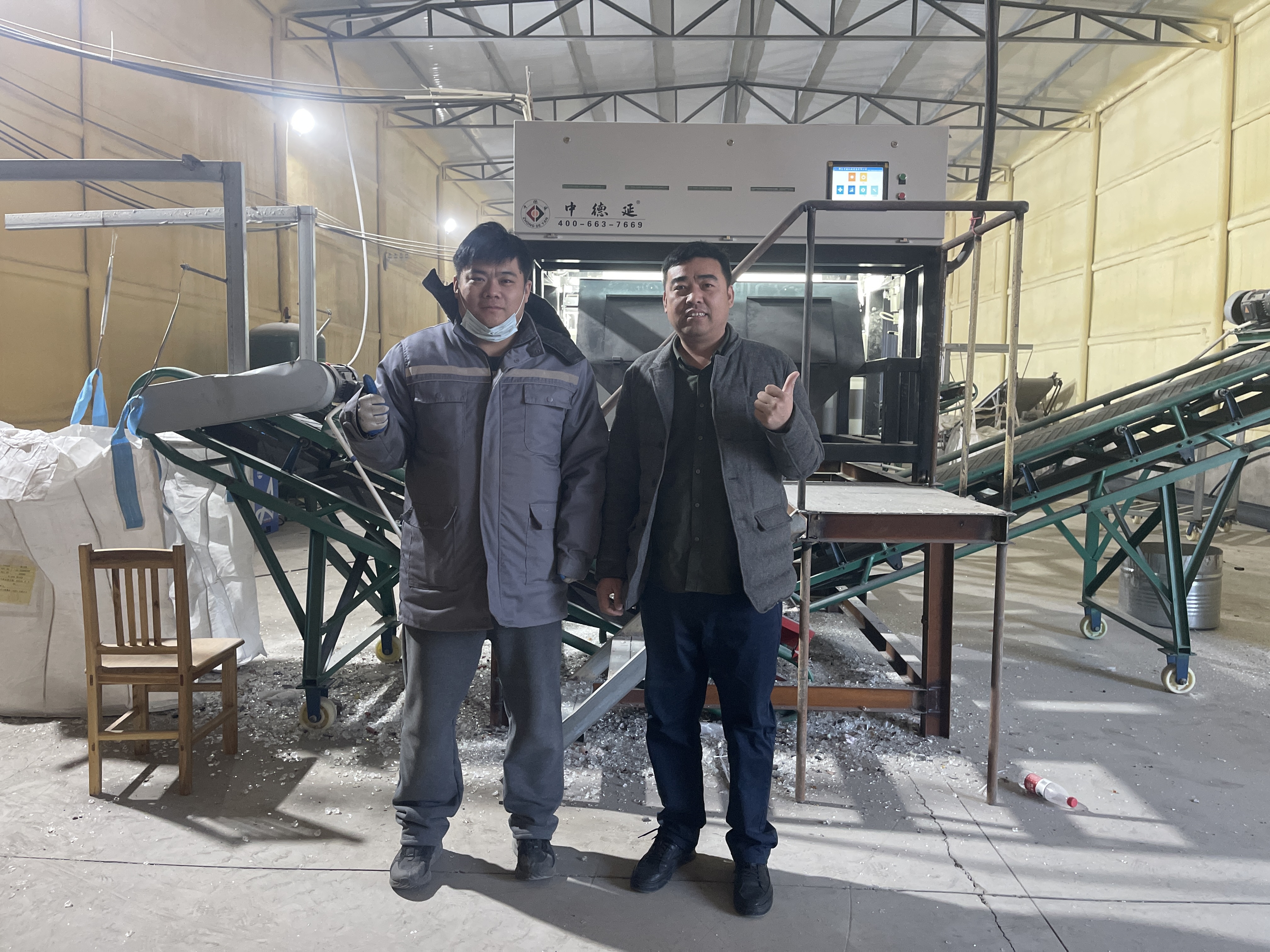
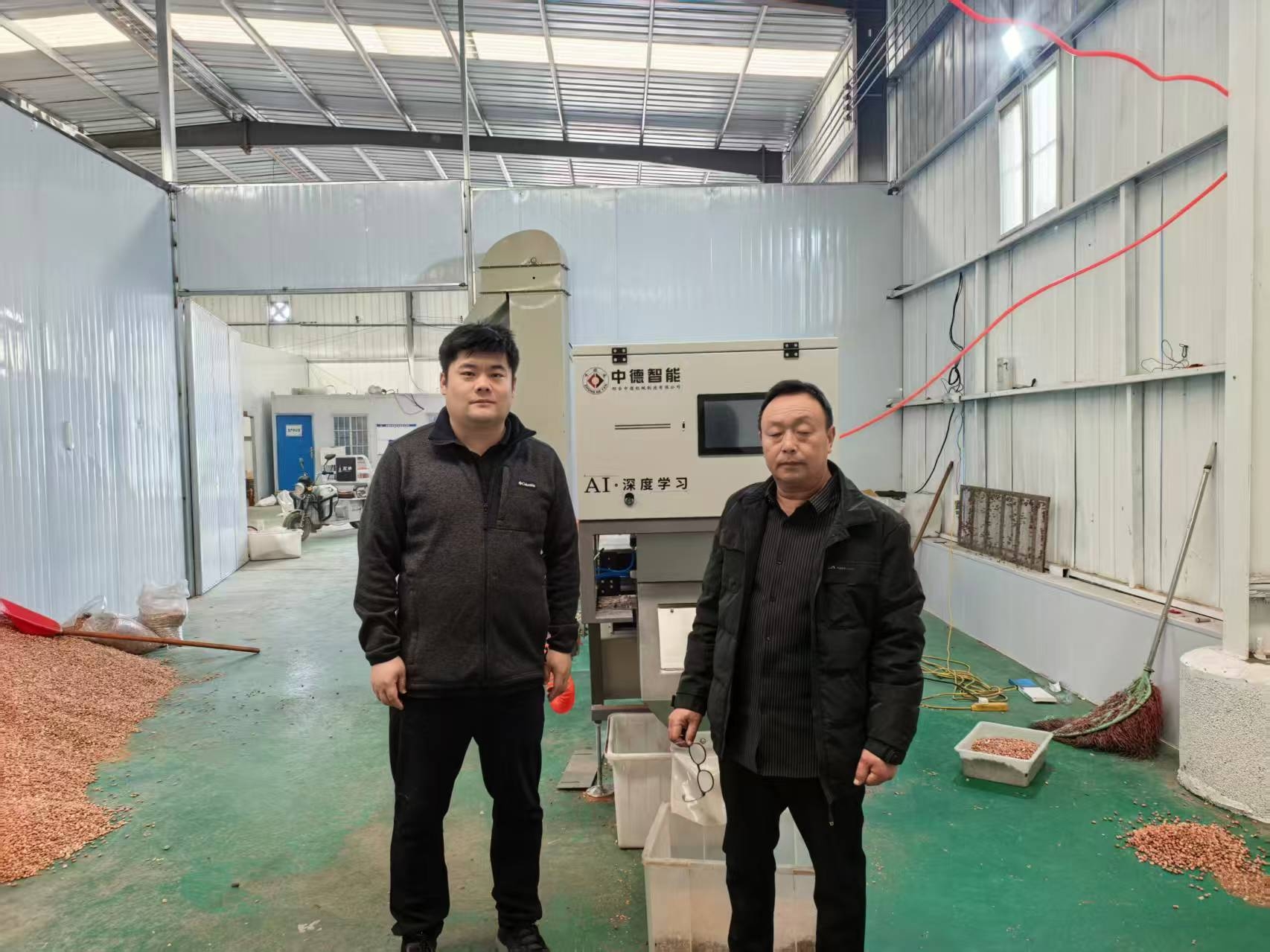
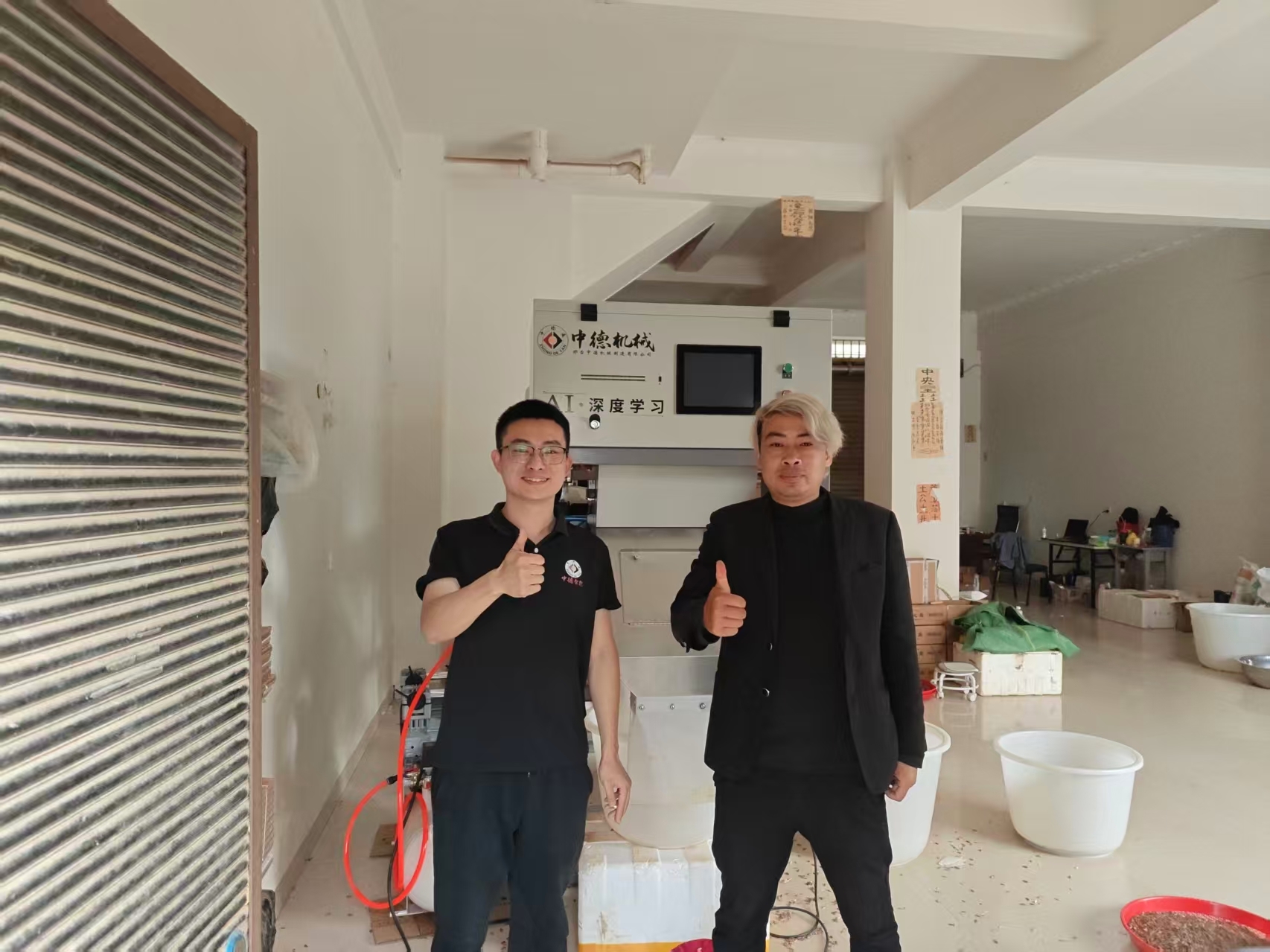
Metal Sorting Machine
¥
19000

Utilizing Spectral Sensing and AI Recognition Technology to Achieve High-Speed, High-Precision Separation of Non-Ferrous Metals and Non-Metallics
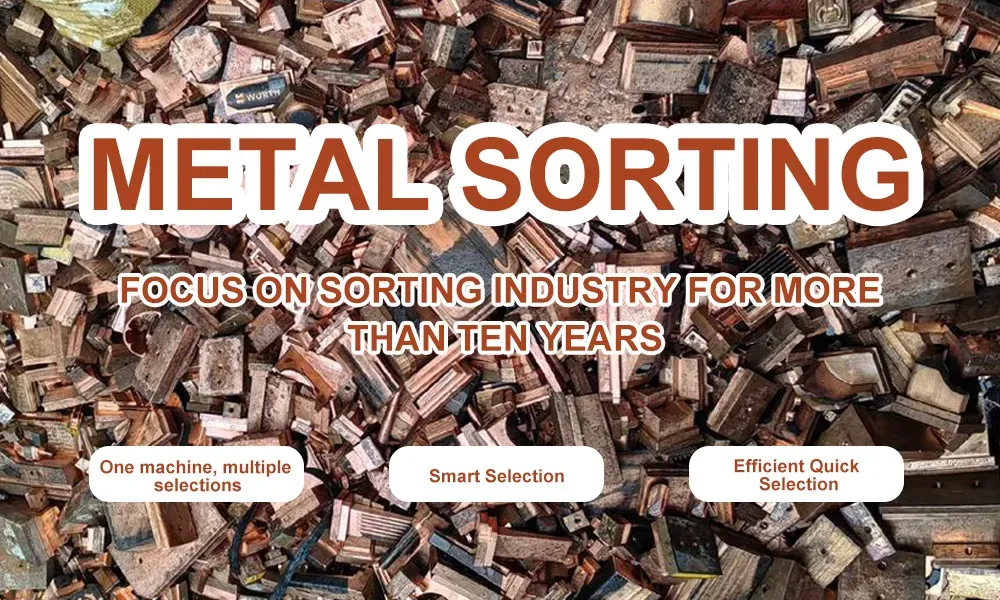
This Industrial Metal Sorting Machine (also known as a Metal Color Sorter) is high-tech intelligent equipment specifically designed for industries such as renewable resource recovery, scrap metal processing, electronic waste dismantling, and mineral sorting. Integrating multi-spectral sensing, X-ray transmission, and artificial intelligence analysis technologies, the equipment can automatically identify and perform high-speed sorting of non-ferrous metals (such as copper, aluminum, zinc, stainless steel, etc.) from mixed materials, separating them from non-metallic impurities or different metal types. This enables high-purity recovery of resources and maximizes their value.
Core Value: Increases recovered metal purity, improves sorting efficiency, replaces manual sorting, reduces overall costs.
The equipment employs an intelligent sorting logic of "Sense - Judge - Execute":
Sense: High-precision sensor arrays (including visible light, near-infrared, laser, and optional X-ray sensors) perform multi-dimensional scans of the material, collecting characteristic data such as color, luster, density, and atomic number.
Judge: Built-in AI algorithm models analyze the data in real-time, accurately determining the metal type of each particle (e.g., distinguishing copper from brass, aluminum from stainless steel) or its metal/non-metal properties.
Execute: The system drives high-frequency electromagnetic ejection valve arrays to precisely blow target metal particles or impurity particles into corresponding collection chutes, achieving separation.
Multi-Spectral Recognition: Effectively distinguishes metals and coatings of different colors and lusters based on the spectral reflection characteristics of the material surface.
Optional X-ray Transmission (XRT) Recognition: Based on differences in material density and atomic number, it can effectively sort metals with similar densities (e.g., copper and zinc), or identify metal parts enclosed in plastic.
AI Deep Learning: The algorithms continuously learn the characteristics of metals from different sources and oxidation states, becoming more accurate with use.
Wide Particle Size Range: Can process shredded metal material with a particle size range from 3mm to 150mm.
High Throughput: Single-machine processing capacity can reach up to 10 tons/hour (depending on material density and particle size).
Strong Anti-Interference: Dust-proof and shock-proof design, suitable for harsh operating conditions in the recycling industry.
One-Touch Operation: Pre-set multiple metal sorting programs (copper-aluminum separation, stainless steel sorting, non-metal removal, etc.) for easy switching.
Data-Driven Management: Records sorting purity, yield, and equipment status in real-time, supporting data export and analysis.
Industrial-Grade Durability: Key contact parts use wear-resistant materials; ejection valve life exceeds hundreds of millions of cycles; low maintenance cost.
| Parameter Category | Specific Description |
|---|---|
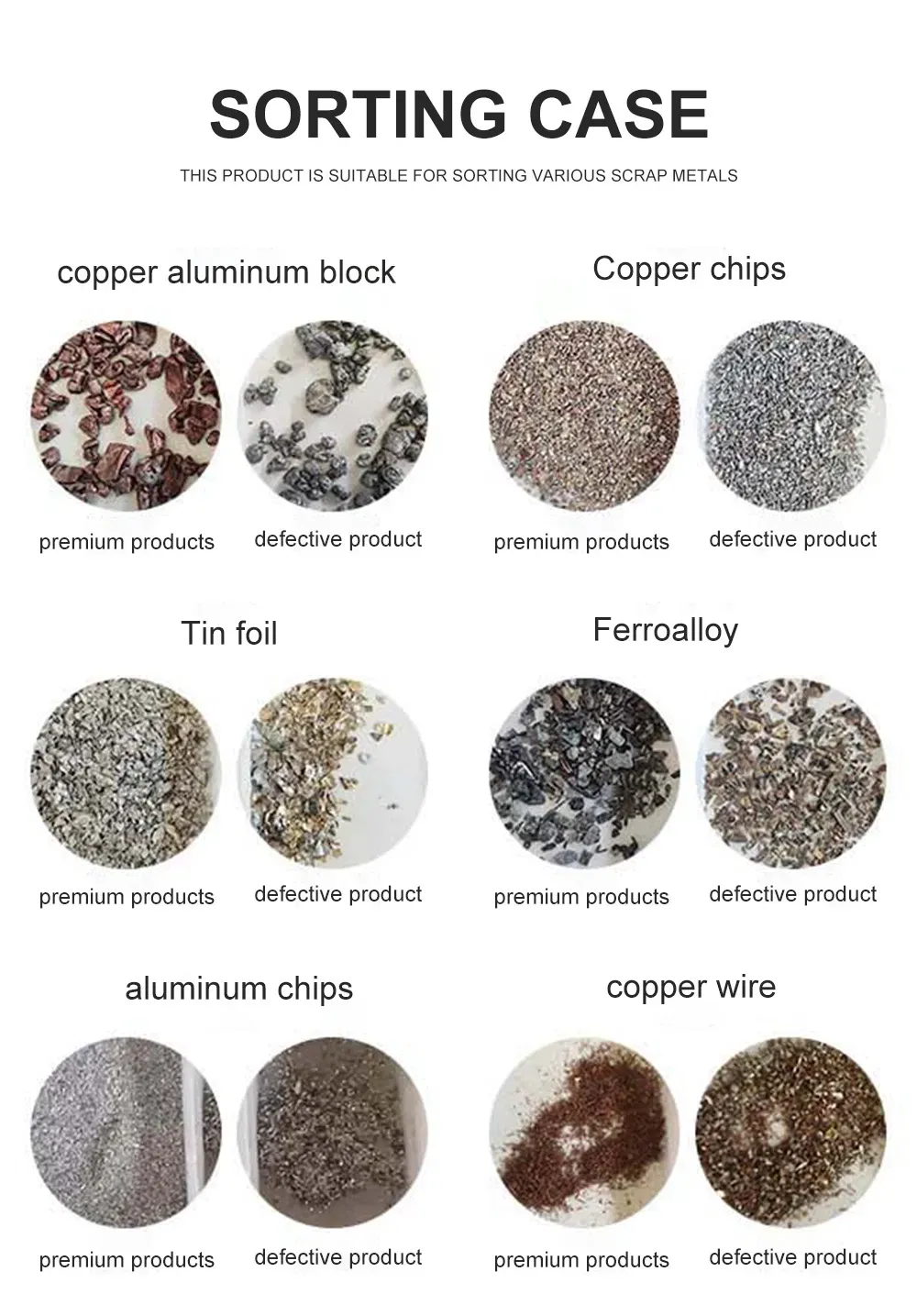
| Applicable Materials | Shredded non-ferrous scrap metal (copper, aluminum, zinc, lead, stainless steel, etc.), shredded electronic waste (e-waste), Automotive Shredder Residue (ASR), shredded waste wire and cable, mining tailings, etc. |
| Sorting Types | Metal vs. Non-Metal (plastic, rubber, wood, stone, etc.) / Separation between different non-ferrous metals (e.g., copper vs. aluminum) |
| Processing Capacity | 2 - 10 tons/hour (depending on material density and particle size) |
| Recognition Technology | High-resolution multi-spectral imaging (standard), optionally configurable with X-ray Transmission (XRT) or Laser-Induced Breakdown Spectroscopy (LIBS) modules |
| Minimum Recognizable Particle Size | ≥ 3mm |
| Sorting Accuracy | Metal recovery rate > 98%, metal product purity > 96% (depending on feedstock contamination level) |
| Ejection Valve System | High-frequency electromagnetic ejection valves, response time ≤ 1 ms |
| Control System | Industrial PC, 15-inch touch screen |
| Power Consumption | Main unit power approx. 5-15 kW (excluding optional modules like XRT) |
| Air Source Requirements | Compressed air, pressure 0.6-0.8 MPa, requires a dryer |
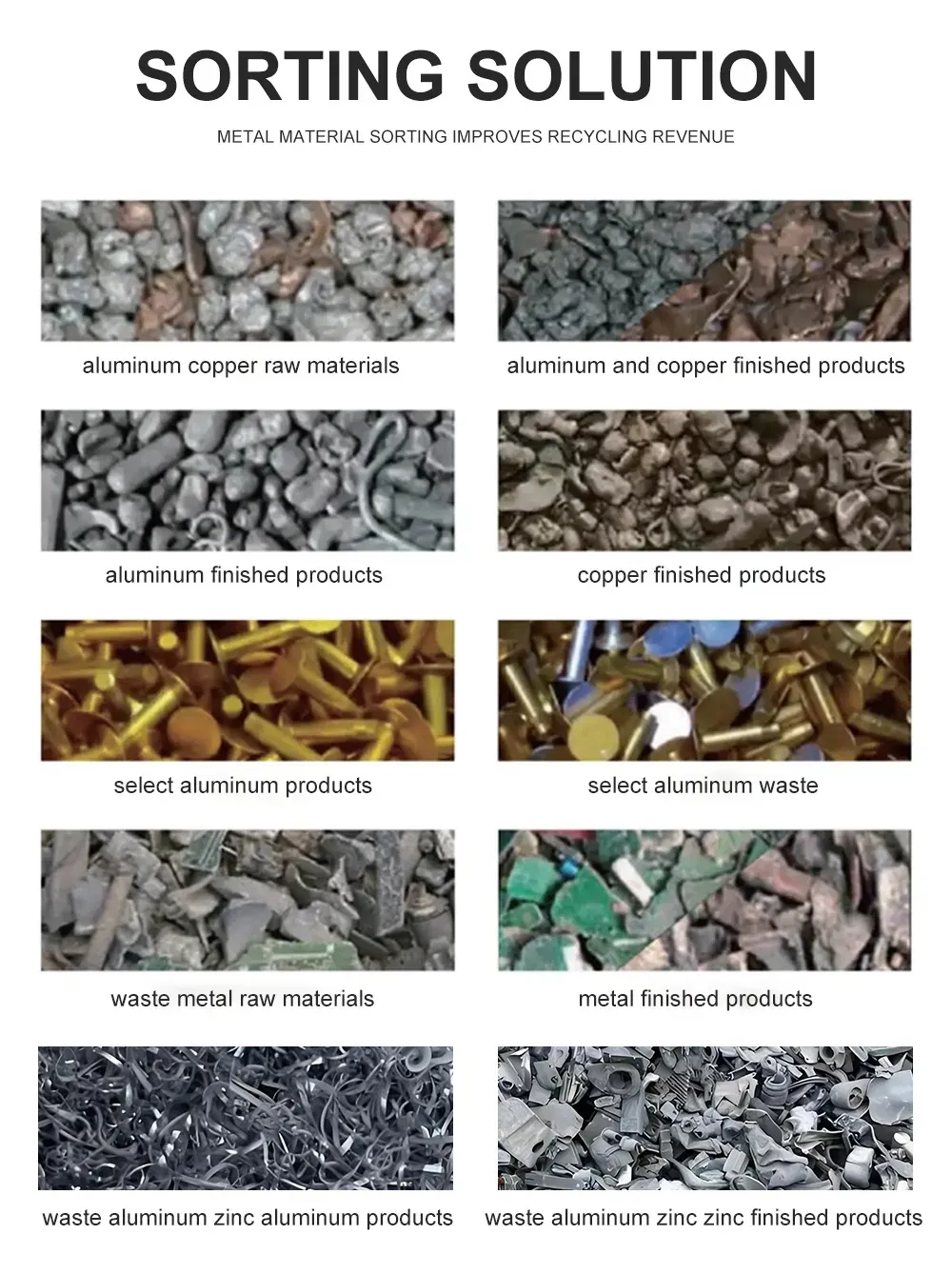
Feedstock: Mixture of copper/aluminum granules and plastic after shredding and stripping.
Challenge: Plastic and metal granules have similar size and color; density-based sorting (water separation) causes pollution and has limited purity.
Solution: Use this equipment to sort based on the spectral reflection differences between metal and plastic.
Result: Obtain copper/aluminum granules with purity >99%; metal residue in plastic <1%; significant value increase.
Feedstock: Mixture of metal and non-metal powder from shredded waste circuit boards.
Challenge: Complex material composition, containing epoxy resin, fiberglass, and various metals.
Solution: Activate the XRT module for precise sorting based on density differences of different materials.
Result: Efficiently enriches precious metal particles, improving subsequent metallurgical efficiency and profitability.
Feedstock: Mixture of non-ferrous metals (copper, aluminum, zinc, stainless steel, etc.) after shredding and magnetic separation of automobile bodies.
Challenge: Multiple metal types, irregular shapes, surfaces may have stains or coatings.
Solution: Employ multi-spectral + AI models to learn the surface characteristics of different metals.
Result: Achieves high-purity separation of copper, aluminum, stainless steel, etc., enhancing resource recovery value.
| Item | Traditional Manual/Mechanical Sorting | Using Metal Color Sorter | Benefit Improvement |
|---|---|---|---|
| Copper Granule Purity | 90%-95% | 98%-99.5% | Selling price increase 8%-15% |
| Labor Dependency | High, requires multiple sorters | Low, only 1 person for monitoring | Saves over 70% in labor costs |
| Processing Speed | Slow, unstable | Fast, up to 3-5 tons/hour | Processing capacity increased 3-5 times |
| Metal Loss | Relatively high (5%-10%) | Very low (<1%) | Directly increases recovery revenue |
| Environmental Impact | May involve wet process, produces wastewater | Pure physical dry sorting, no pollution | Environmentally compliant, no treatment costs |
Free Material Analysis: Provides laboratory-grade material testing and sorting feasibility assessment.
Customized Solution Design: Offers personalized sorting line configuration based on your raw material characteristics, capacity requirements, and target product specifications.
Turnkey Project: Responsible for equipment installation, commissioning, operator training, and production process optimization guidance.
Full Lifecycle Service: Provides genuine spare parts, remote technical support, regular maintenance, and technical upgrade services.